
Veteran physicist Professor Umesh V Waghmare has been appointed as the Secretary of the Department of Science and Technology. Currently a professor at JNCASR, Bengaluru, his appointment was approved by the Appointments Committee of the Cabinet. He succeeds Professor Abhay Karandikar and brings a distinguished academic background from IIT-Bombay, Yale, and Harvard to the role.

India aims to become a globally competitive and technologically self-reliant semiconductor powerhouse by 2047, leading in next-generation chip technologies. This vision, highlighted at the ESTIC 2026 conclave where DRDO played a key role, focuses on developing a sustainable semiconductor ecosystem, creating high-value jobs, and ensuring digital security and economic strength through indigenous chip capabilities.

Niti Aayog has launched the India Science and Technology (S&T) Scoreboard, highlighting state-wise performance in research publications and patent applications. Tamil Nadu, Uttar Pradesh, and Maharashtra are the top three states in research publications, with Tamil Nadu also leading in patent filings. The interactive platform aims to help states benchmark progress and formulate better S&T policies.

Meghalaya Chief Minister Conrad K Sangma on Friday inaugurated a high-performance sports science centre in Shillong, aiming to provide scientific training, injury prevention, and recovery support to athletes ahead of the National Games. Olympic gold medallist Abhinav Bindra praised the state's investment in athlete development, highlighting the importance of supporting athletes before they achieve recognition. The centre, operational since September, is part of Meghalaya's long-term strategy to strengthen its sporting ecosystem and promote wider youth participation.

Technology giant Google has announced a USD 5 million funding initiative for IIT Kharagpur to accelerate advanced AI research and cultivate scientific talent in India. The funding will support research in areas like Indic languages, agriculture, and educational technology, alongside expanding AI training and curriculum development for students and faculty. Google CEO Sundar Pichai highlighted the importance of this partnership in advancing India's innovation landscape.
A seminar in New Delhi commemorated Acharya Prafulla Chandra Ray's birth anniversary, focusing on his significant contributions to pharmaceutical sciences and his vision for indigenous research and self-reliance. Organised by DPSRU and VIBHA, the event highlighted Ray's pioneering efforts in "Swadeshi science" and his role in establishing India's pharmaceutical industry.
Government of India Department of Science & Technology announces Boyscast Fellowship 2009-10.
The Infosys Science Foundation announced the winners of the Infosys Prize 2026 across six categories: economics, engineering and computer science, humanities and social sciences, life sciences, mathematical sciences, and physical sciences. The prize now focuses on researchers under 40, recognising early exceptional talent with a gold medal, citation, and USD 100,000.

The BRICS New Delhi Declaration has endorsed India's proposals for a Working Group on Sports Technology and a Sports Goods Manufacturing Conclave, aiming to enhance cooperation and innovation among member nations in the sports sector.

Atomic Energy Commission chairman Ajit Kumar Mohanty stated that India is on the verge of a significant technological transformation, driven by advancements in AI, quantum technologies, and other fields. Speaking at BIT Mesra's convocation, he emphasised the need for strong indigenous capabilities, skilled professionals, and interdisciplinary collaboration to achieve a developed India. Other speakers, including BIT Mesra's Chancellor and Vice Chancellor, echoed the importance of continuous learning and contributing to national progress.
The BCCI has opened applications for the Head of Sports Science and Medicine position at its Centre of Excellence, a role that has remained vacant since March 2025 despite previous attempts to fill it. The successful candidate will provide strategic leadership for sports science and medicine services, focusing on player welfare, injury prevention, and rehabilitation for elite Indian cricketers.
Noted scientist Prof V Ramgopal Rao highlights India's significant progress in higher education and research but points out a critical gap in converting scientific discoveries into market-ready technologies. He advocates for a robust institutional framework, multidisciplinary collaboration, and stronger academia-industry ties to foster innovation and translate research into practical products.
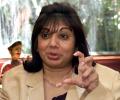
Kiran Mazumdar-Shaw, Executive Chairperson of Biocon Ltd, stated that Artificial Intelligence (AI) could drastically reduce the drug development timeline from five-to-seven years to just one or two. Speaking at the Bengaluru Tech Summit, she highlighted AI's potential to revolutionise drug discovery, clinical trials, and precision medicine, urging for regulatory frameworks to keep pace with these advancements.
Cortex DC, a company of The Chatterjee Group (TCG), announced its entry into the data centre market with plans to develop 2 GW of AI-ready capacity across India over the next seven years. The initiative aims to meet the growing demand for high-performance computing, targeting hyperscalers, cloud service providers, and advanced AI workloads with a focus on speed, scale, and sustainable power.
Delhi-NCR has become India's leading centre for AI-enabled robotic-assisted cardiac surgeries, with 21 installations and approximately 1,800 procedures performed in 2025. Experts predict a 40 per cent rise in 2026, driven by advanced medical infrastructure and growing adoption. This minimally invasive approach offers benefits like reduced trauma and faster recovery, positioning India to potentially surpass the US in such procedures by 2031.
India on Thursday unveiled a new science policy that lays greater thrust on innovation, establishing research institutes and encourage women scientists with an aim to position itself among the top five scientific powers in the world by 2020.

Karnataka Chief Minister D K Shivakumar urged the Centre to expedite statutory clearances for the Mekedatu balancing reservoir project and withdraw recommendations of the Kasturirangan report on the Western Ghats. He also requested aligning CSR initiatives with state guidelines to upgrade 1,000 government schools. These demands were made during the inauguration of CoSMOS in Mysuru, attended by Prime Minister Narendra Modi, where Shivakumar also highlighted Karnataka's contributions to space technology and the importance of decentralising scientific infrastructure.
West Bengal has launched an Emerging Quantum and Semiconductor Technologies (EQST) section at CSIR-CGCRI to attract investments and position the state as a hub for next-generation technology. Minister Kalyan Chakraborti highlighted India's need to invest in these crucial sectors and outlined the state's plans to collaborate with institutions and leverage budget initiatives to foster research and start-ups.

Russian President Vladimir Putin has proposed a new investment platform, based on the New Development Bank (NDB), to fund projects in trade, infrastructure, logistics, and technology across BRICS nations, emphasising that the grouping's expanding economic cooperation is not 'against anyone' but aims to advance members' national interests.

India's indigenous NavIC regional navigation system has been significantly bolstered by ISRO's successful launch of the NVS-03 satellite.
Researchers at BRIC-RGCB in Thiruvananthapuram have developed a novel nanopore-based sensing technology. This innovation allows for the early and highly sensitive detection of biomarkers associated with neurodegenerative diseases like Parkinson's and ALS, addressing a critical challenge in current diagnostic methods. The technology, published in Nature Nanotechnology, uses self-assembling dual-diameter nanopore sensors to identify disease-specific biomarkers even at low concentrations.

Sikkim's Education Minister Raju Basnet highlighted the potential of computational mathematics and artificial intelligence in predicting landslides and weather risks at an international conference. Experts discussed the role of mathematics in AI, scientific discovery, and the need for interdisciplinary research and international cooperation to develop reliable AI systems for real-world challenges.
IBM Chairman and CEO Arvind Krishna details the company's substantial annual investment in India and its global USD 10 billion commitment to quantum computing over the next five years. He addresses the potential for AI to displace 10-20 per cent of jobs, particularly in the BPO sector, while also highlighting India's significant opportunity in the AI ecosystem. Krishna urges India to accelerate AI adoption, scale existing tech initiatives, and build its semiconductor manufacturing, advocating for a light-touch approach to AI regulation and emphasizing critical thinking in an AI-driven economy.
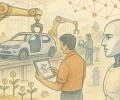
Indian companies showcased their quadruped robots at the Bengaluru Tech Summit, with General Autonomy's Param winning a race. The event highlighted India's growing capabilities in robotics and Physical AI, with robots designed for defence, industrial surveillance, and security applications.
Scientists have developed an advanced gene therapy that effectively reduces tremors associated with Parkinson's disease. This new approach, detailed in a package of 26 studies, is more effective and less invasive than current treatments. The research also includes a comprehensive multi-species cellular atlas of the basal ganglia, offering new insights into neurological conditions like schizophrenia and autism.

rediffGURU Nayagam PP, a career coach and founder of EduJob360 guides students and working professionals on how to pick the right skills and career path.
Educationists and policy experts at the Indian Statistical Institute (ISI) in Kolkata emphasised the critical need for developing a robust database, leveraging modern technology and artificial intelligence, to enhance effective policymaking. The two-day conclave, featuring prominent speakers like Prof S Mahendra Dev, highlighted the ongoing transformation in official statistics and the importance of public trust and research.

Seven of the top 10 best-performing Indian smallcap stocks over the past year, linked to the US data centre boom and AI infrastructure, are now facing a valuation test as enthusiasm for AI investment shows signs of cooling on Wall Street. Analysts warn that the rally in these Indian counterparts may have left valuations increasingly stretched, with any pullback in US capital expenditure potentially weighing on their share prices.
Researchers at IIT-Kanpur have identified a molecular pathway where immune cells in the pancreas rapidly suppress insulin release, offering a new target for therapies to protect insulin production in individuals with obesity and Type-2 diabetes. The study found that macrophages use sphingolipids to switch off beta cell insulin secretion within minutes, a process triggered by the GPR18 receptor.
Researchers at IIT-ISM Dhanbad have been granted an Indian patent for an electrochemical reactor designed to recover copper from industrial wastewater. This innovative technology offers an environmentally sustainable solution for resource recovery and wastewater treatment, particularly benefiting the mining and metallurgical sectors.

Maharashtra Cyber has dismantled an inter-state racket involved in generating fraudulent Foreign Medical Graduate Examination (FMGE) certificates, leading to five arrests. The operation uncovered a scheme where individuals obtained forged certificates to register with the Maharashtra Medical Council without passing the mandatory screening test.

Lieutenant Governor Manoj Sinha on Wednesday expressed confidence that Jammu and Kashmir would soon become terror-free, asserting that only a handful of foreign terrorists remained in the Union Territory.

Union Home Minister Amit Shah inaugurated the 12th battalion campus of the National Disaster Response Force (NDRF) at Hollongi, Arunachal Pradesh, emphasising a 'zero-casualty' approach to disaster management. The new earthquake-resistant facility aims to significantly enhance disaster preparedness and response across the vulnerable Northeast region, focusing on timely warnings, community participation, and advanced training for NDRF and SDRF personnel.

'Peter Hegemann was so kind that a paper published in 2010 in Nature Method which mentioned optogenetic as a tool of the year, he wrote, 'My graduate student Suneel Katariya was the one who identified gene in coding channelrhodoxin and that was the turning point of my research'.'

Several Indian-Americans have achieved significant victories in the US midterm elections, with five securing seats in the House of Representatives and Maryland Lieutenant Governor Aruna Miller winning re-election. The article profiles these successful candidates, highlighting their backgrounds and contributions to American politics.
IIT-Kharagpur announced the establishment of India's first dedicated academic school for Physical Artificial Intelligence (AI), named the Benjamin Gupta School of Physical AI. Funded by a Rs 35 crore investment, including contributions from alumnus Vinod Gupta and an anonymous donor, the school will focus on developing intelligent systems that interact with the physical world, moving beyond conventional data-driven AI. Academic programmes are expected to commence soon, aiming to foster reliable and responsible AI technologies for various applications.

Under the NEET-UG 2026 rules, students can complete physics, chemistry, biology as additional subjects through a recognised board such as NIOS after Class 12, says rediffGURU Radheshyam Zanwar, founder of Zanwar Classes.

Temple, a wearable startup by Zomato co-founder Deepinder Goyal, is facing significant scientific scrutiny from doctors regarding its Rs 85,000 forehead-worn device. Critics question the evidence behind its claims of measuring brain blood flow and providing insights into ageing, with prominent hepatologist Cyriac Abby Philips calling it a "scam." Goyal has defended the technology, stating it's a fitness and wellness device, not medical, and that metrics await clinical validation, while also addressing pricing and scientific methodology.
A new MoU between the Centre for Cellular and Molecular Platforms (C-CAMP) and Imperial College London has paved the way for deepening India-UK ties in the life sciences sector.
India and ASEAN have reached an accord to enhance partnership in the field of science and technology with a thrust on bio-technology and agriculture. \n\n
